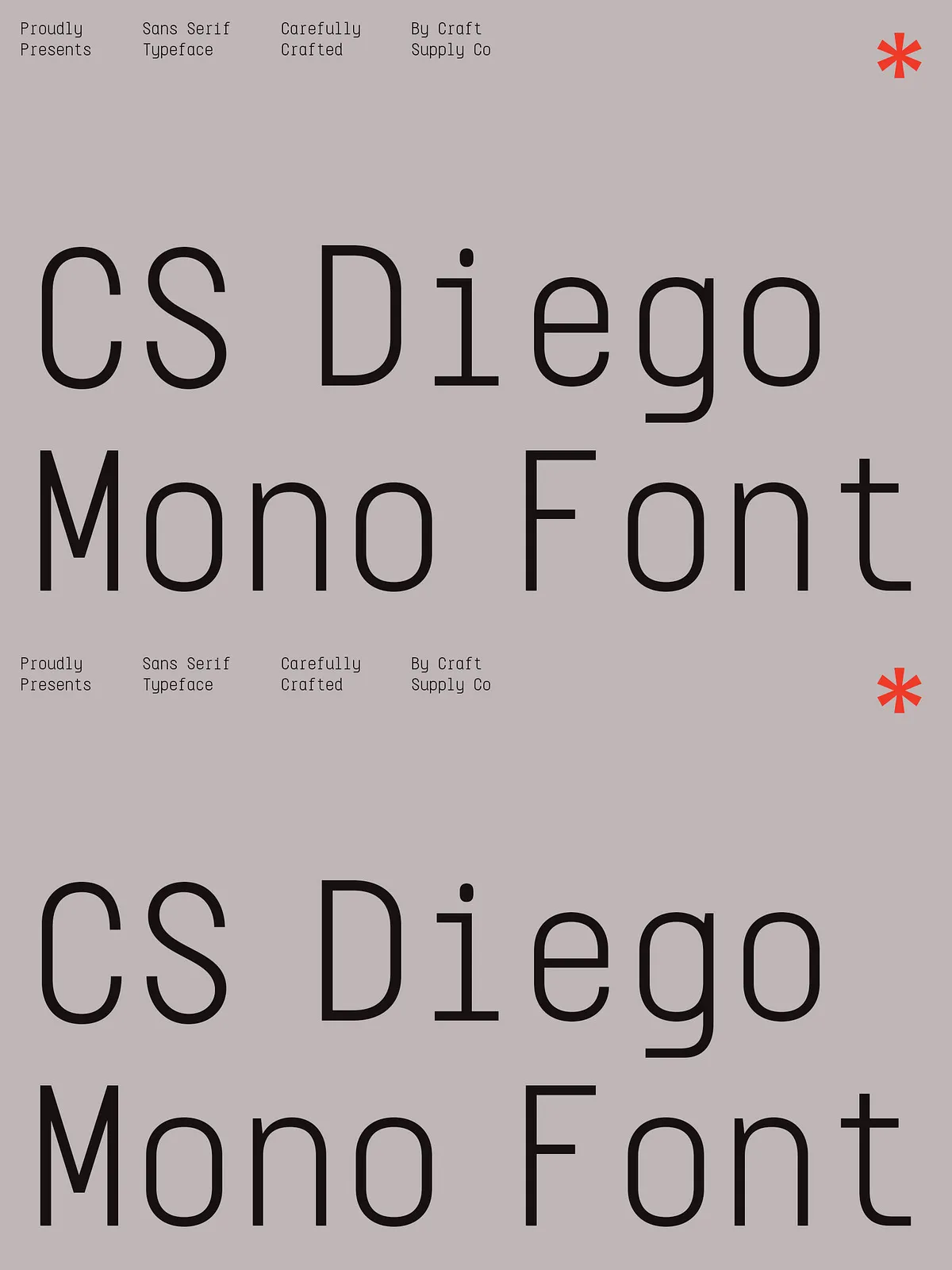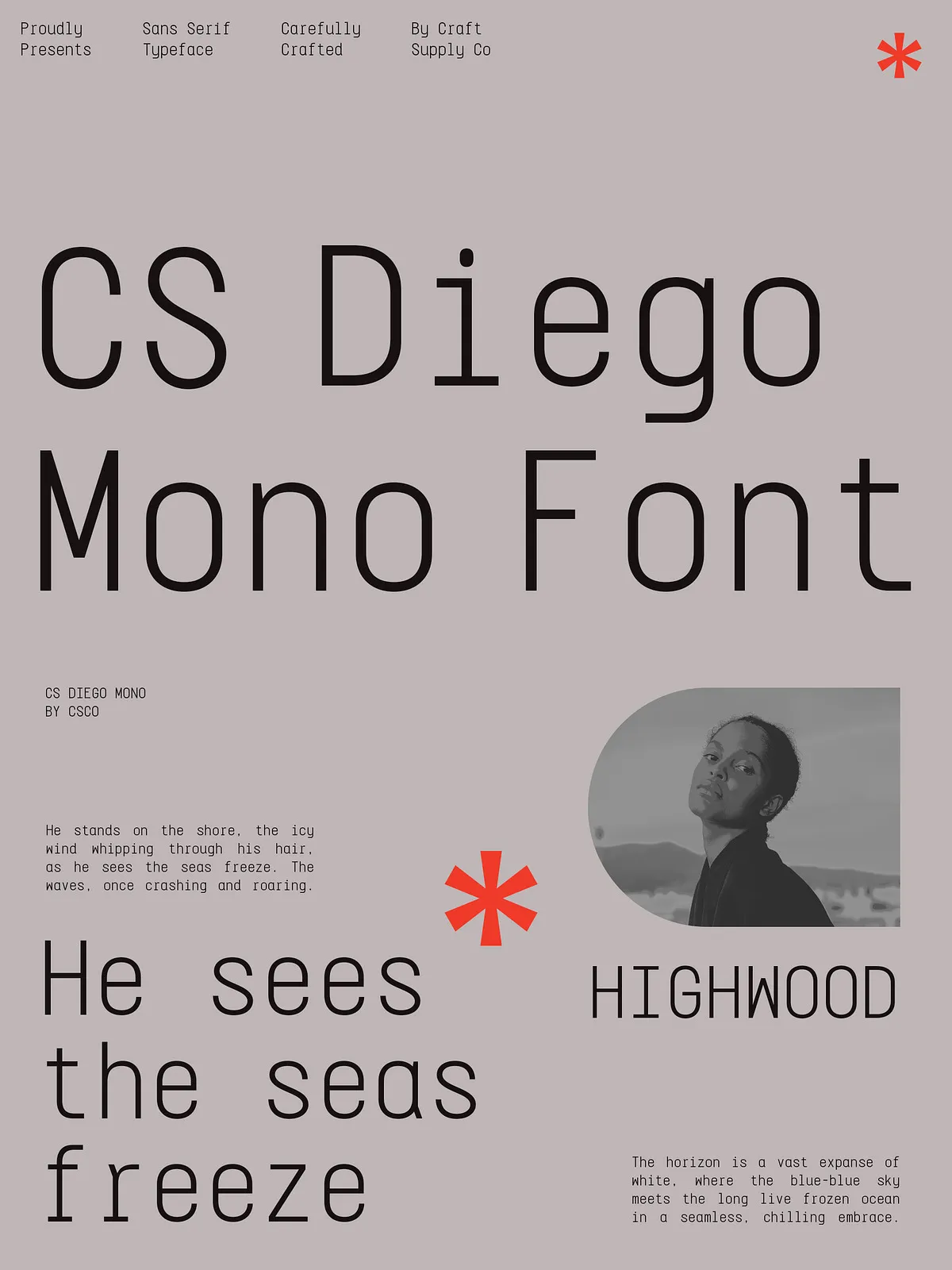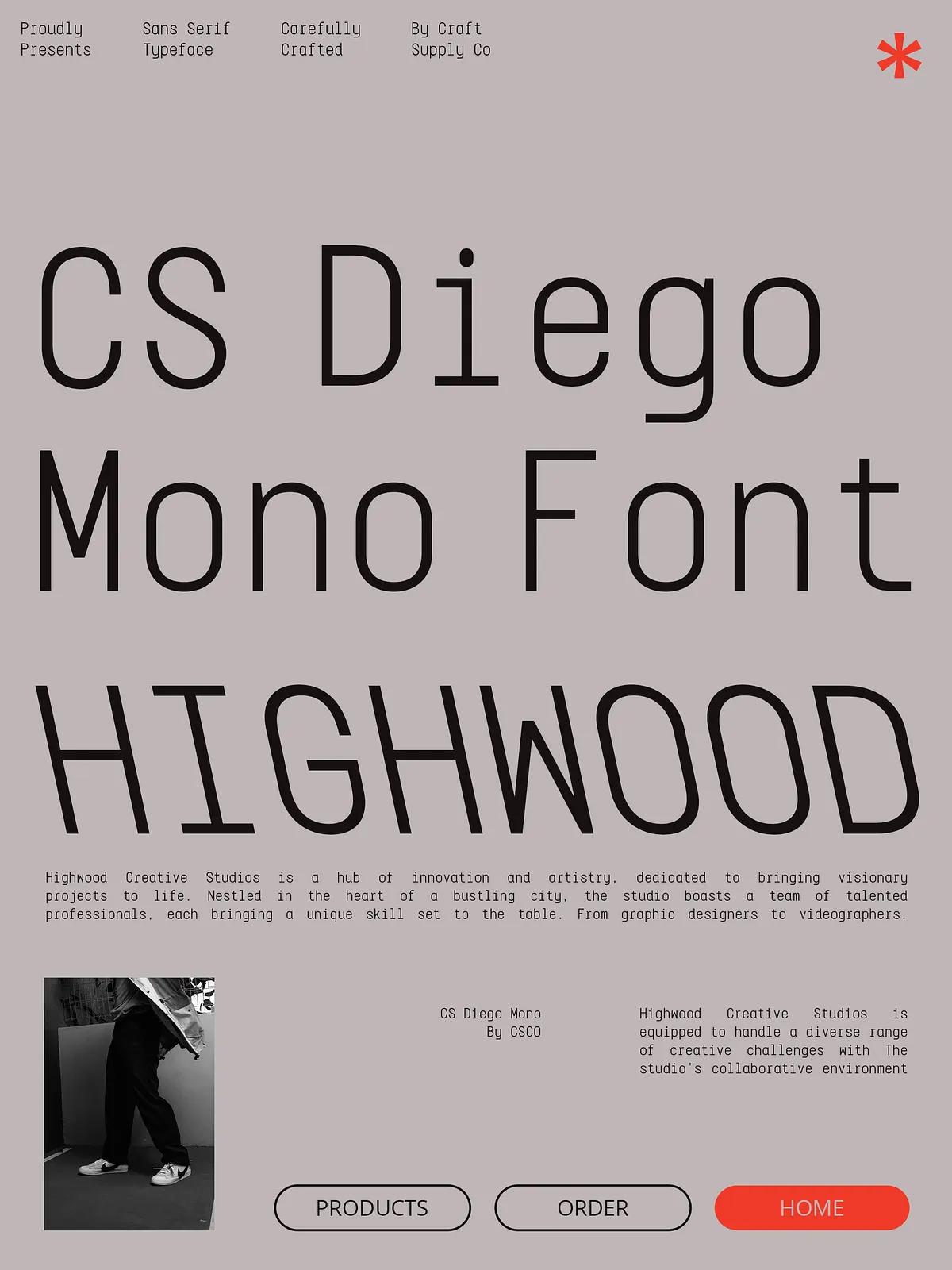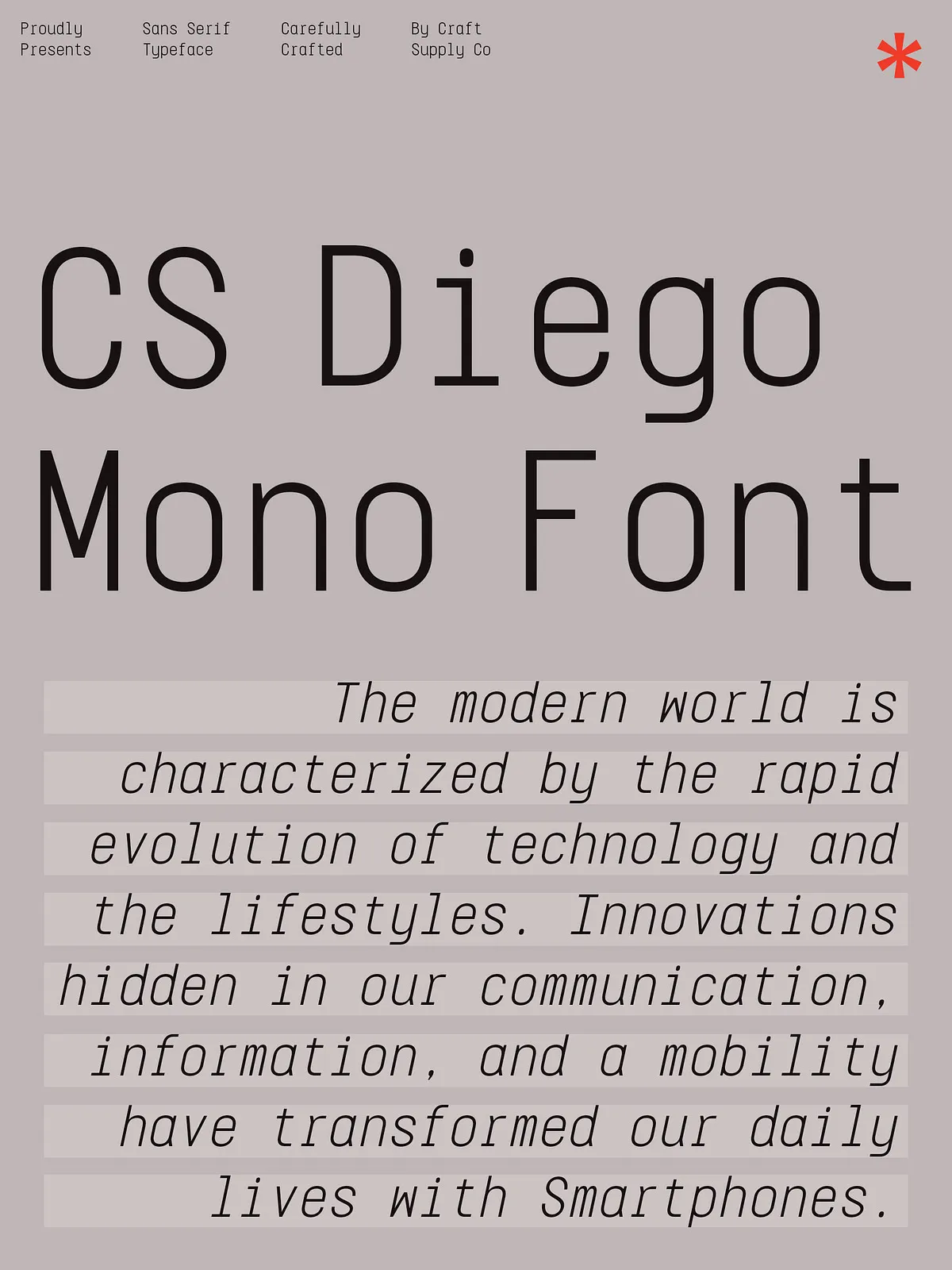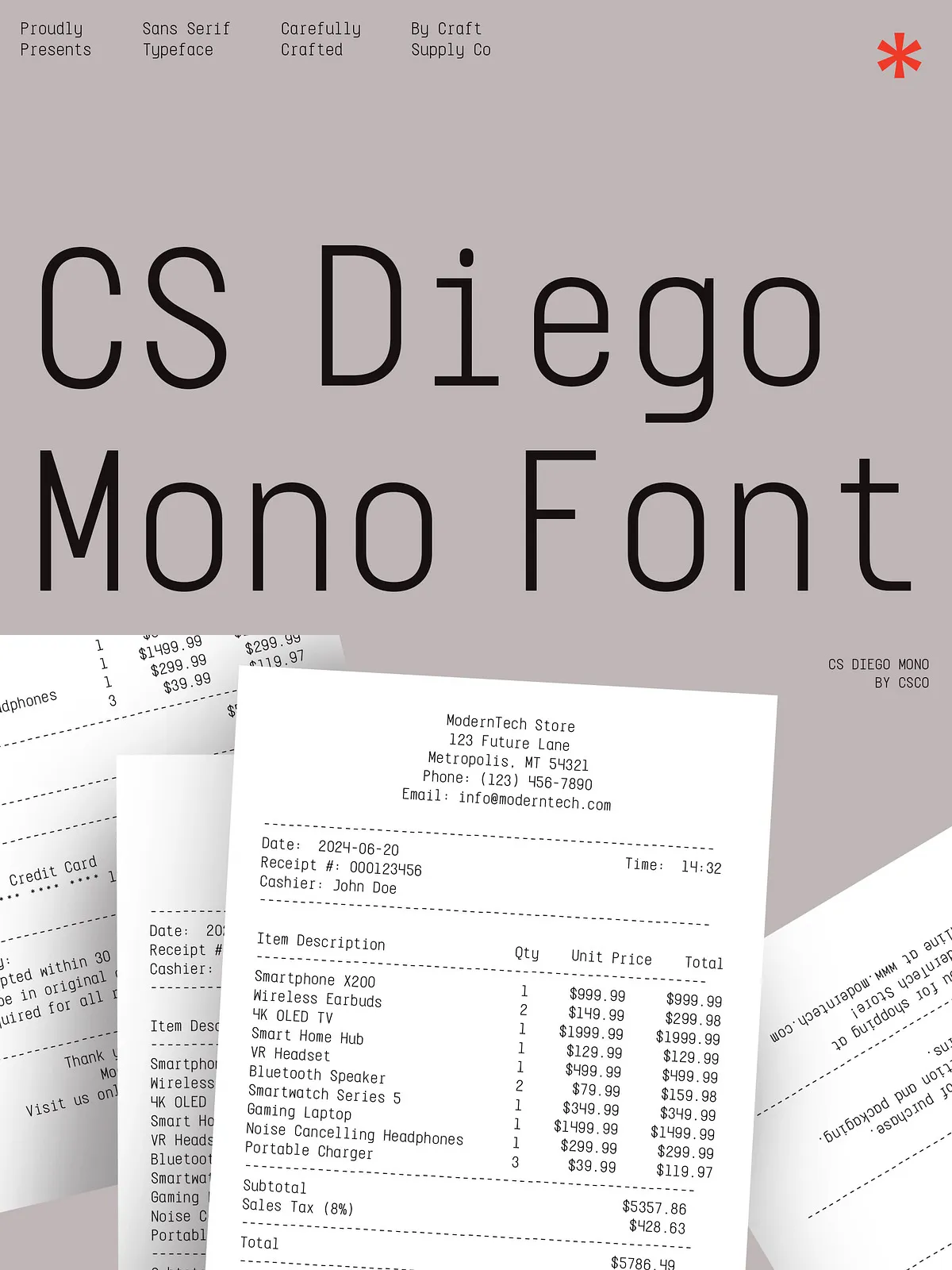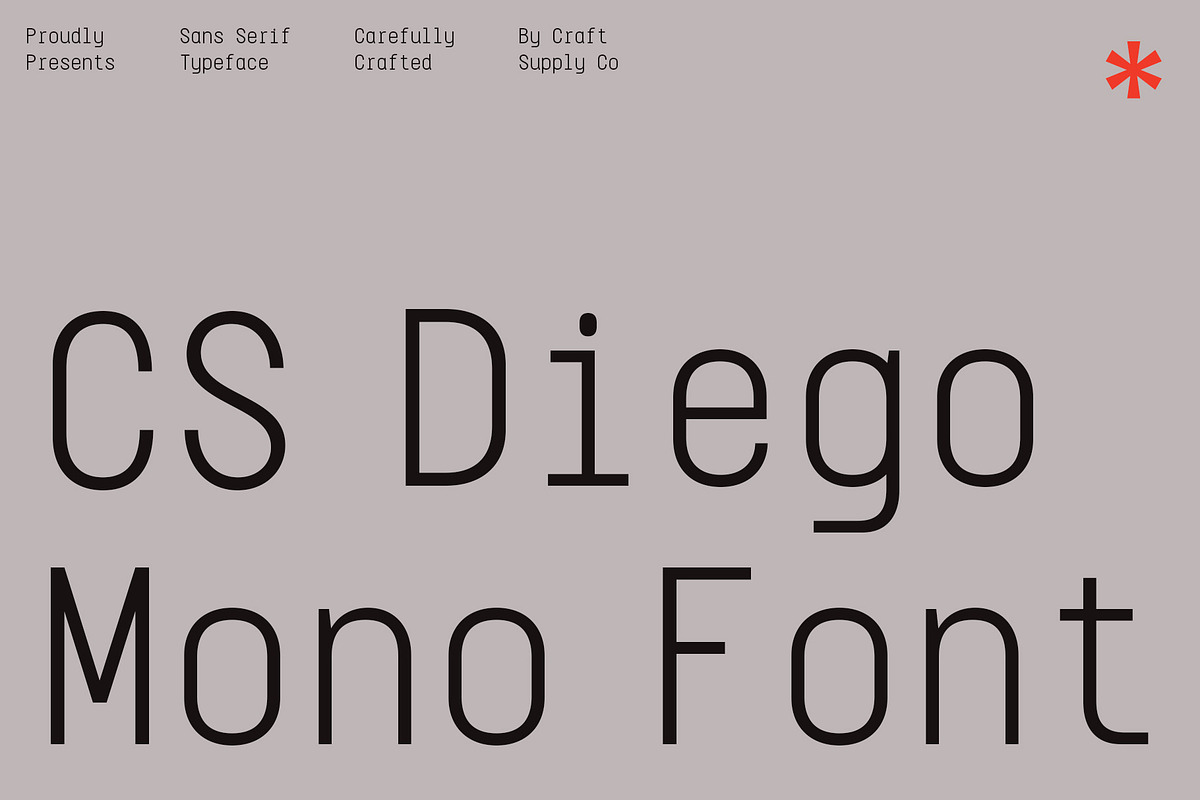

CS Diego Mono delivers a focused, modern monospace sans-serif crafted to maximize legibility and alignment in technical contexts. The design enforces consistent character widths so developers, technical writers, and interface designers can present code, tables, and tabular data with clear, predictable spacing. CS Diego Mono balances mechanical precision with human readability to serve both programming environments and contemporary brand applications.
Core Features
Monospace consistency
Every glyph in CS Diego Mono occupies the same horizontal space, which preserves column alignment and improves line-by-line comparison in source code and logs. This fixed-pitch approach helps readers scan code, detect mismatched indentation, and compare characters visually without distraction.
Clean sans-serif aesthetics
The sans-serif construction removes ornamental terminals and prioritizes simple, open shapes. CS Diego Mono uses neutral stroke contrasts and clear counters to maintain clarity at small sizes and on low-resolution displays. Designers will find the typeface approachable for both UI labeling and printed technical documentation.
Styles and variants included
This family ships with three core fonts to support diverse typographic needs:
- CS Diego Mono Regular — the primary workhorse for code blocks and body text.
- CS Diego Mono Italic — used for emphasis, comments, and inline annotations.
- CS Diego Mono ReverseItalic — a stylistic complement that provides a distinct slanted voice for special states or branding treatments.
Technical Details
Character support and encoding
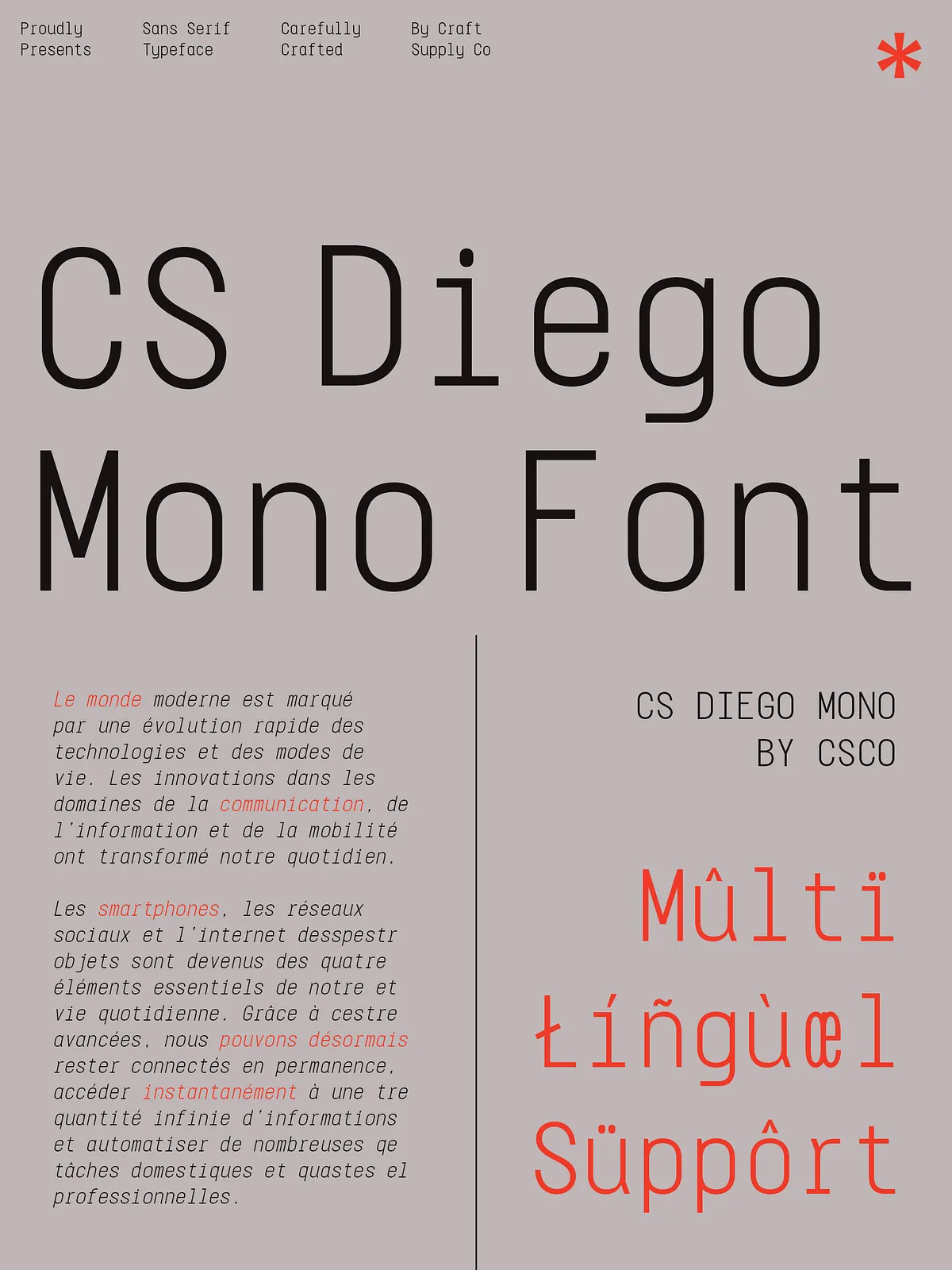
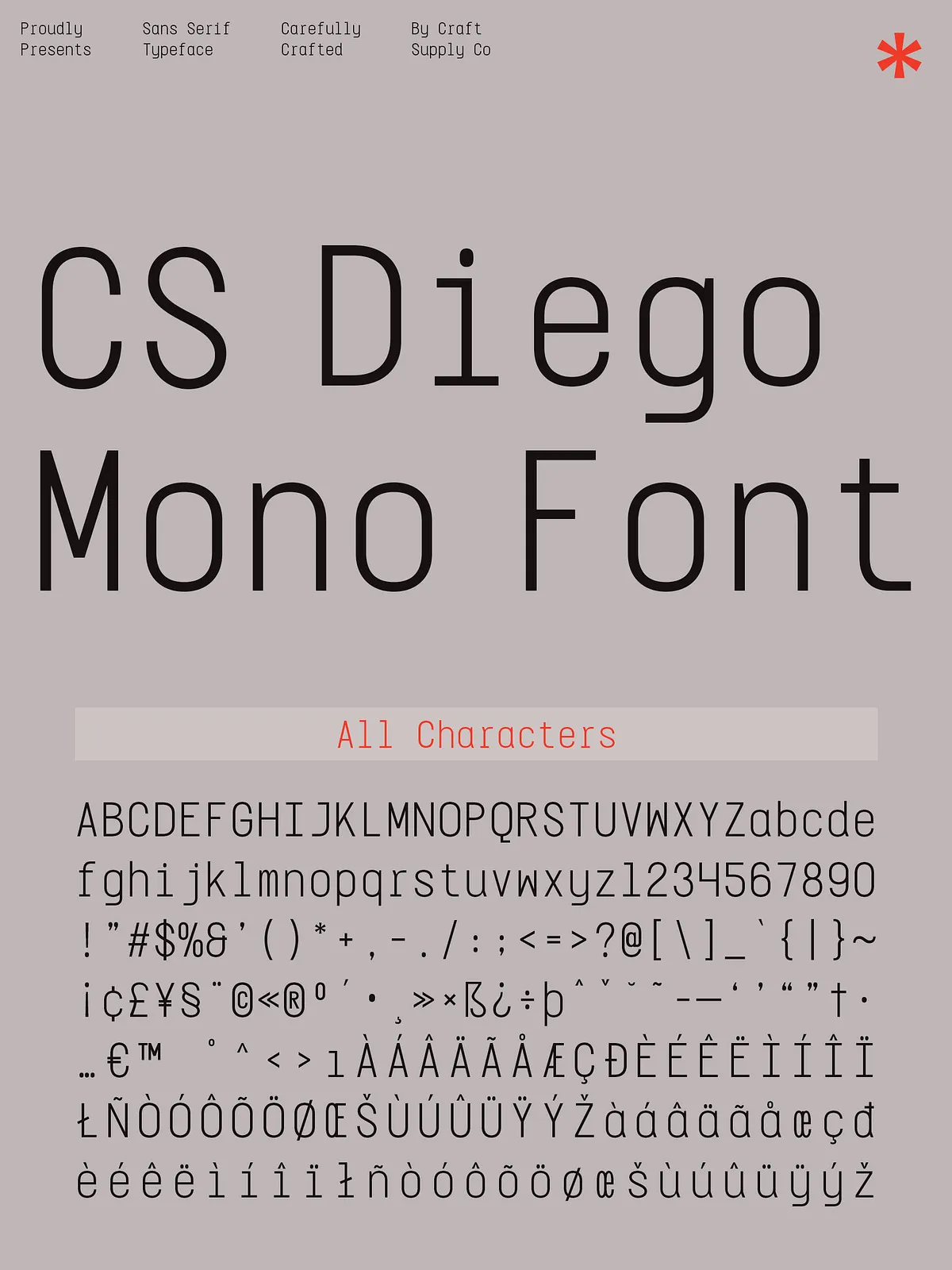
CS Diego Mono includes uppercase and lowercase alphabets, numerals, standard punctuation, and accented characters for multilingual text. The family provides PUA (Private Use Area) encoding to grant designers easy access to discretionary glyphs and alternate characters via typical font tools.
OpenType and application compatibility
Built with modern font production practices, CS Diego Mono supports standard OpenType features commonly used in development editors and advanced layout apps. While the font performs reliably in web, desktop, and UI environments, testers should confirm behavior in legacy systems that lack full OpenType or PUA support.
Practical Applications
Where CS Diego Mono excels
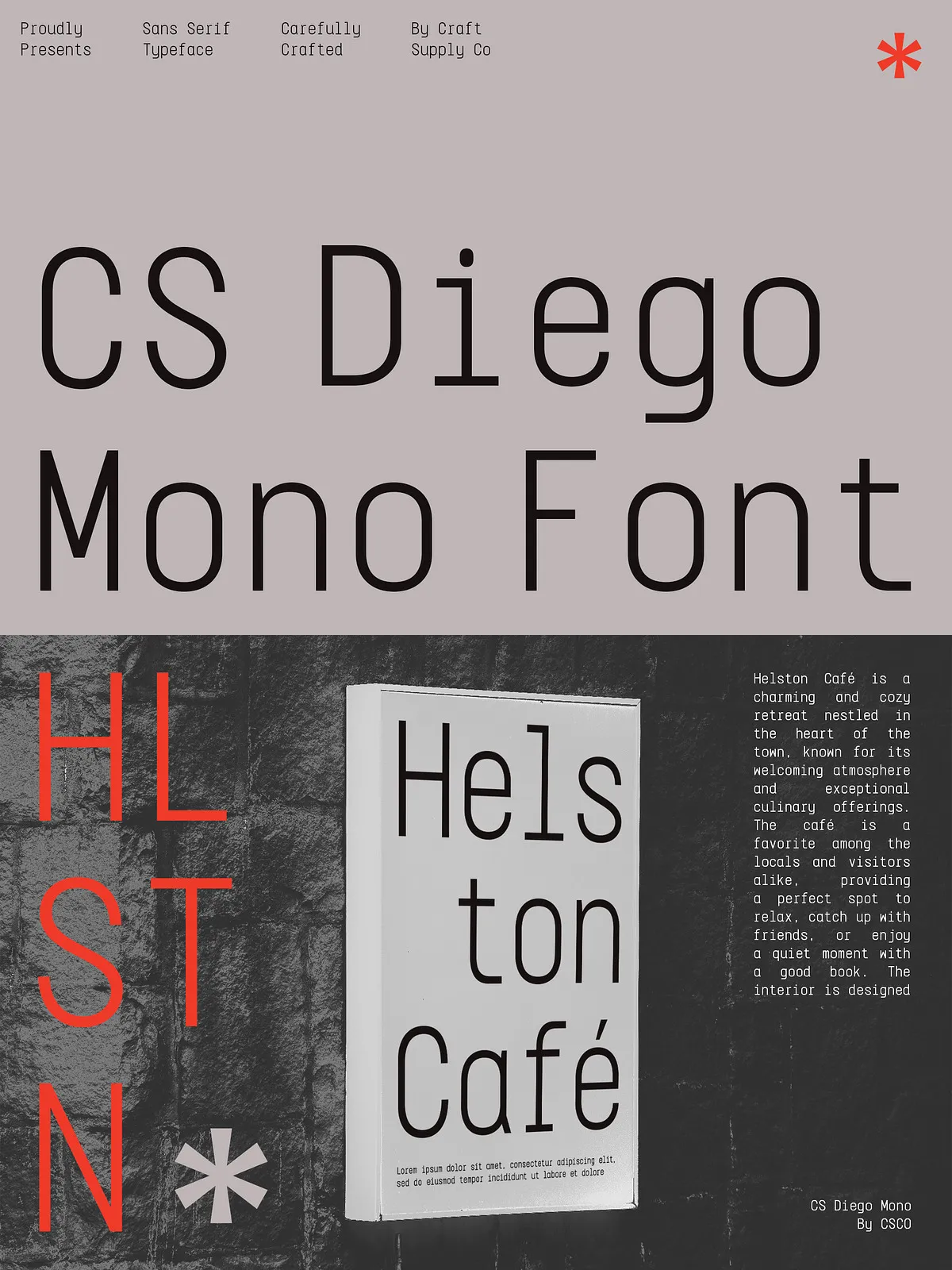
Use CS Diego Mono for code editors, documentation sites, technical blogs, terminal emulators, and developer-facing dashboards. The face also works well in UI components such as buttons, form fields, and tables where fixed-width alignment improves usability. Beyond technical contexts, CS Diego Mono can lend a contemporary, utilitarian tone to branding, packaging, and editorial projects that require a structured, readable voice.
Usage Tips
Optimizing legibility
- Set line-height slightly larger than default to improve vertical rhythm in code blocks and reduce crowding.
- Use the Italic style for comments, citations, or to visually separate inline notes from core content.
- Pair CS Diego Mono with a neutral sans-serif for UI body text to maintain visual harmony while preserving the monospace sections’ clarity.
Included Files & What You Get
Package contents
- CS Diego Mono Regular (desktop and web fonts)
- CS Diego Mono Italic (desktop and web fonts)
- CS Diego Mono ReverseItalic (desktop and web fonts)
- Full character set with accents and punctuation
- PUA-encoded glyphs and usage notes
Licensing & Support
Licensing guidance
Review the included license file to confirm permitted desktop, web, app embedding, and commercial uses. If you need extended rights for redistributing or embedding at scale, contact the foundry or vendor to negotiate an appropriate license.
Technical support
If you encounter rendering issues or need help accessing PUA glyphs, consult the documentation included in the package or contact the designer’s support channel. Test the font across target platforms and update your rendering environment to ensure consistent results.
Background on Monospace Fonts
Why monospace matters
Monospace typefaces serve a unique role in computing and design by enforcing uniform glyph widths.