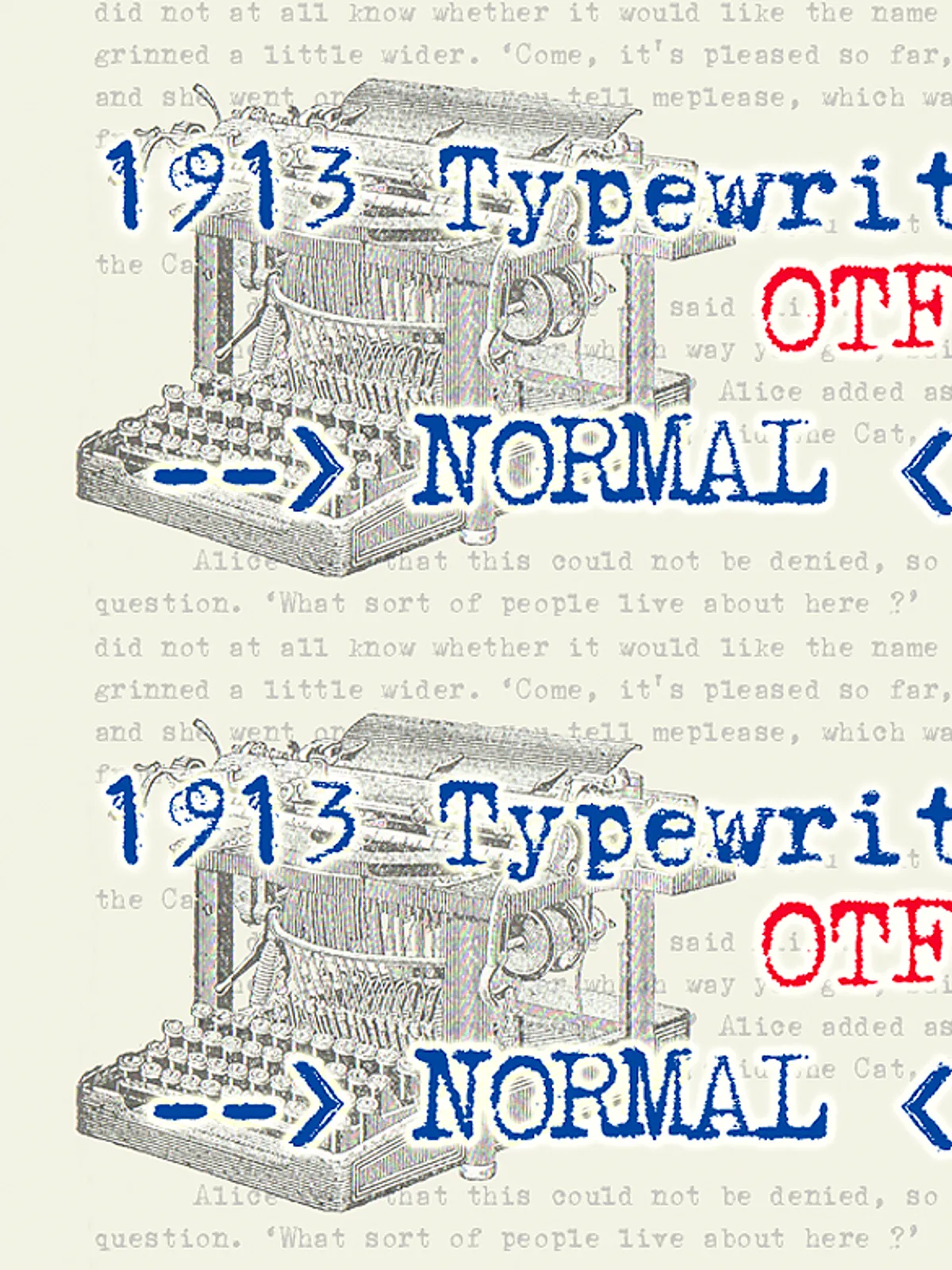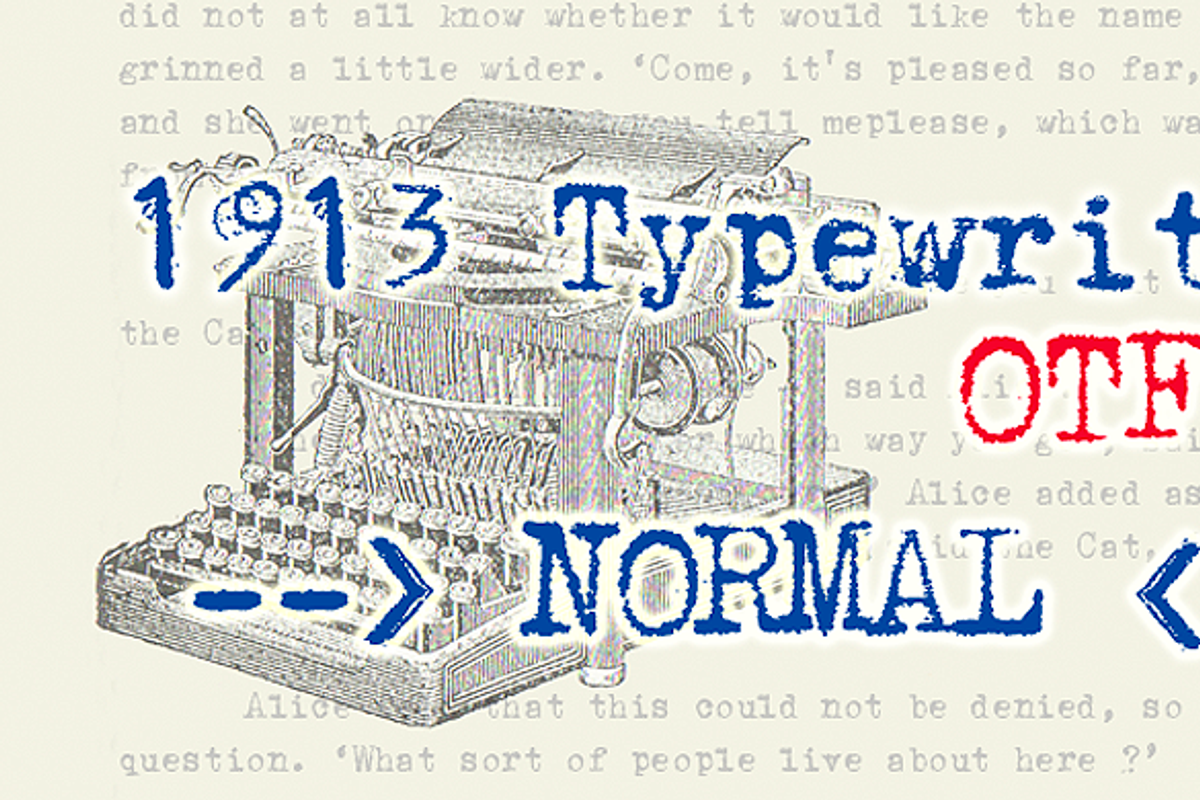

Recreate the raw, unfiltered essence of early 20th-century writing with the 1913 Typewriter Font — a meticulously handcrafted monospaced typeface based on the mechanical character of a genuine small portable typewriter from 1913. This isn’t just a font; it’s a time capsule of typewritten history, carrying the imperfections, wear, and haunting beauty of old office life, literary drafts, and existential paperwork.
Each glyph bears the fingerprints of mechanical reality — slight misalignments, ink smudges, paper feed marks, and naturally worn edges. The result? A typeface that feels authentic, human, and deeply evocative. It speaks of Hemingway’s feverish edits, of anonymous civil servants in dimly lit rooms, and of noir detectives scribbling notes in shadowed alleys. This is typography with storytelling power.
Born from History, Built for Modern Design
Designed from original scan data of the 1913 typewriter’s typebars, this font preserves its original irregularities while ensuring modern usability. Whether you’re crafting a gritty film poster, designing the cover of a crime novel, or creating a website that wants to whisper secrets, this font delivers unmatched atmosphere.
- Authentic character wear — Slight ink bleed, uneven strokes, and minor misalignment replicate real typewriter usage.
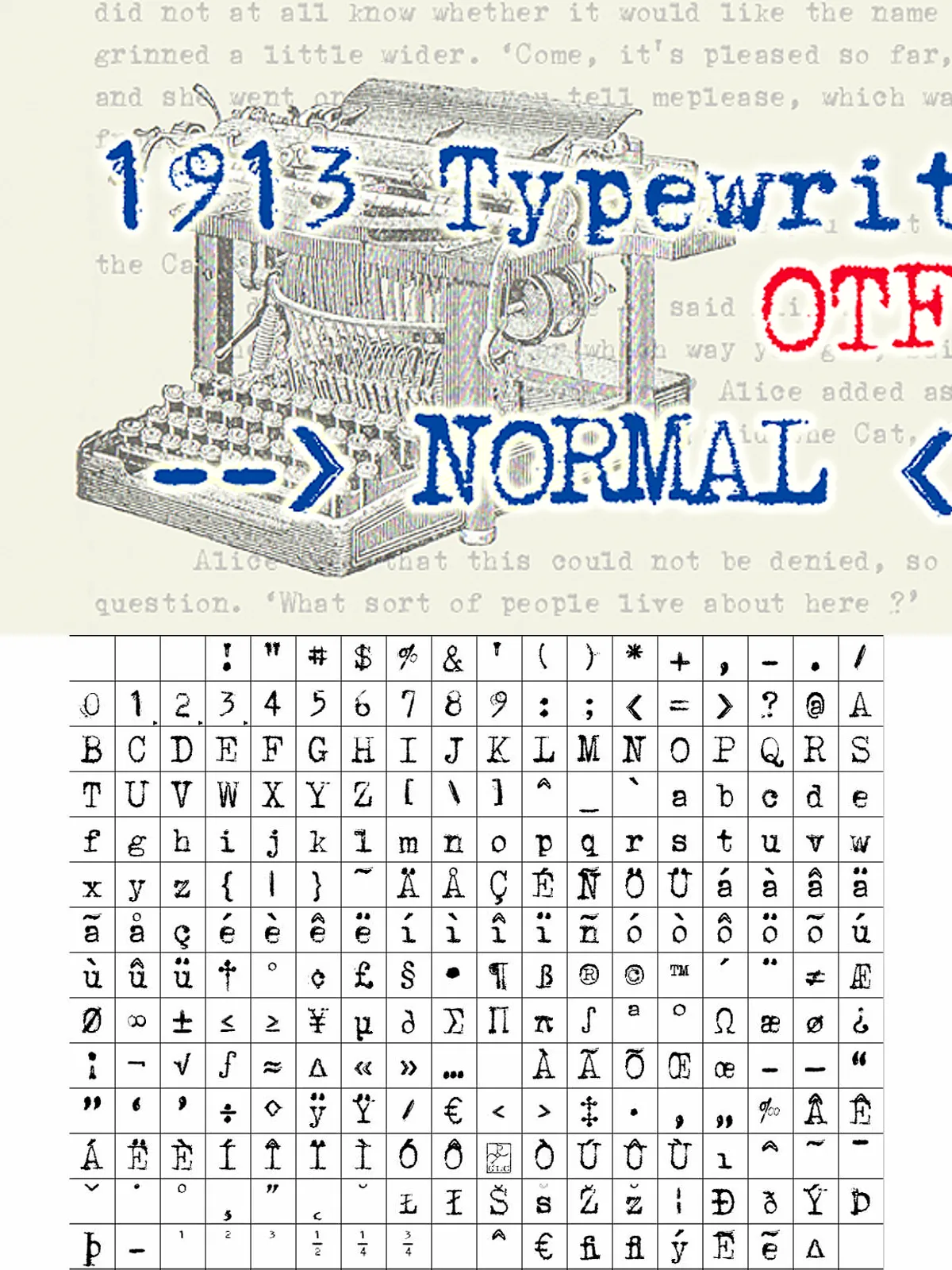
- Complete alphabetic coverage — Full uppercase and lowercase alphabet, perfect for titles, body copy, and captions.
- 251 carefully crafted glyphs — Includes accented characters (French, German, Spanish), punctuation, and special symbols.
- Extensive symbol set — Supports €, $, £, ©, ®, and standard ligatures like ß, fi, and fl.
- OTF format only — High-quality OpenType encoding for flawless compatibility with professional design software (Adobe CC, CorelDRAW, Figma).
Pro Tips for Maximum Impact
To unlock the full emotional depth of this font, consider these presentation techniques:
- Use pale or mid-tone colors — Opt for light grey, charcoal, or faded ink tones instead of dense black. This enhances the texture and lets the subtle wear pattern shine.
- Allow breathing room — The slightly irregular nature of the characters benefits from generous spacing. Avoid tight kerning to preserve authenticity.
- Scale up for impact — While the original typewriter used 11–12 point characters, this digital version excels at larger sizes, making it ideal for posters, titles, and branding.
Where This Font Truly Comes Alive
The 1913 Typewriter Font isn’t just decorative — it’s context-aware. It transforms digital spaces with a narrative presence. Ideal for:
- Book cover design — Perfect for crime, literary fiction, or historical non-fiction with a noir edge.
- Film and event posters — Instantly conveys vintage, gritty, or mysterious vibes for noir films, retro festivals, or indie projects.
- Website headlines and landing pages — Creates intrigue and visual tension for brands telling stories of legacy, resistance, or authenticity.
- Art installations & print branding — Excellent for packaging, stationery, and limited-edition prints where texture and mood matter.
- Graphic novels and editorial layouts — Enhances mood and genre tone with minimal effort.
Designed for the Discerning Artist and Historian
This font was created for those who value history, imperfection, and emotional resonance. It’s not for clean, sterile designs — it’s for thoughtful, deliberate, tactile storytelling. The single style (normal weight) ensures consistency across your design system and avoids visual clutter, giving you full control over tone and weight.
It works brilliantly in both digital and print formats, maintaining clarity at any size. Whether you’re designing a 300 dpi print piece or a 4K web banner, the 1913 Typewriter Font renders with striking fidelity and texture.
Ready to Write the Past into Your Story?
Don’t just type — echo the past. Use the 1913 Typewriter Font to give your design a soul, a history, a whisper from the machine age.
Download now and let every character tell a tale. Because real history doesn’t look perfect. It looks human.